In recent years, homeowners in climate-prone areas have faced increasing challenges in securing affordable and comprehensive insurance coverage. The escalating frequency and severity of climate-related disasters have led to higher premiums, policy cancellations, and a growing number of underinsured properties. Understanding the factors contributing to this crisis and exploring potential solutions is crucial for homeowners navigating this complex landscape.
The Growing Insurance Crisis
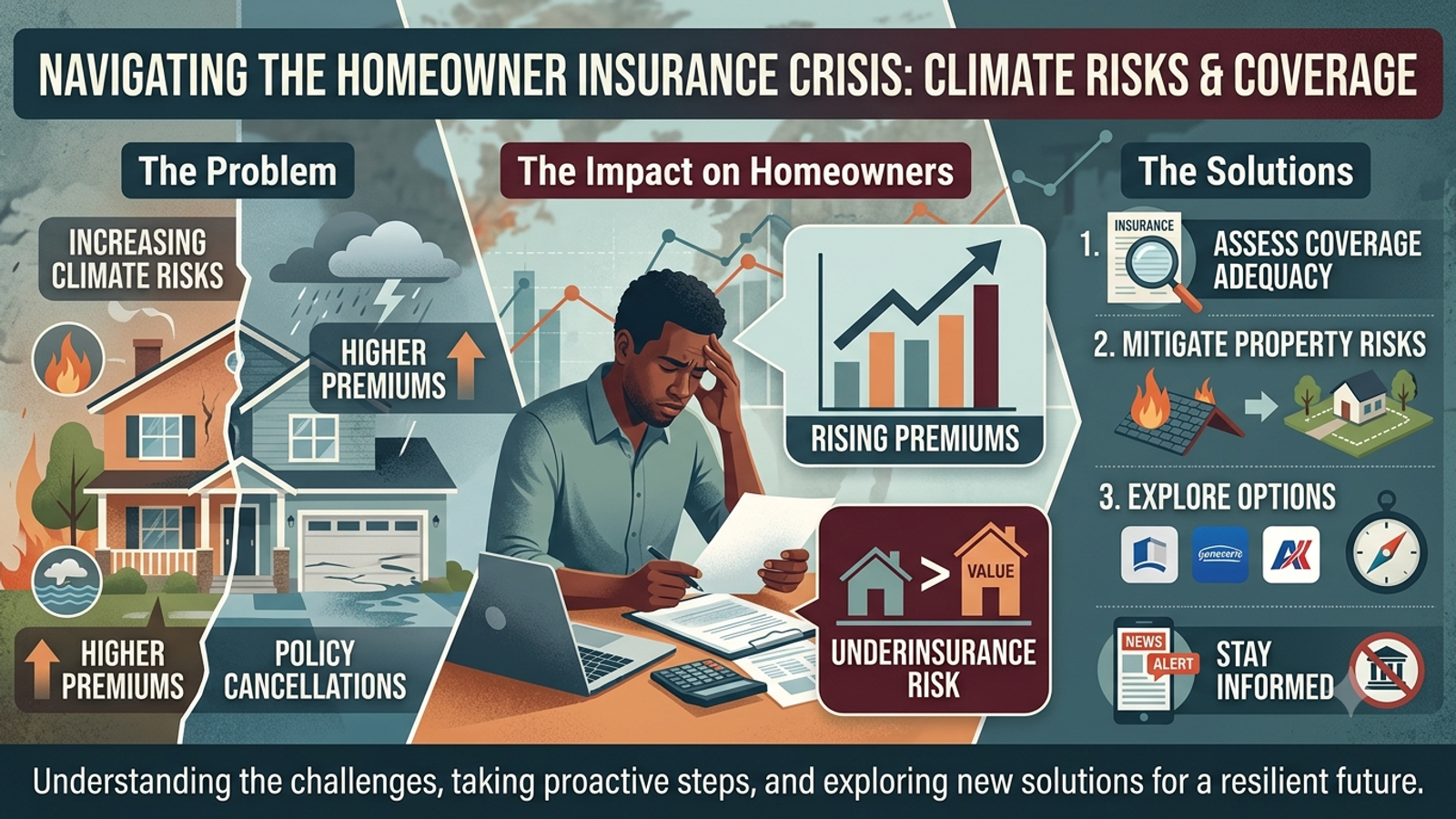
Climate events have intensified natural disasters such as wildfires, hurricanes, floods, and severe storms. These events have resulted in substantial financial losses for insurance companies, prompting them to reassess their risk exposure. Consequently, many insurers have increased premiums, reduced coverage, or withdrawn from high-risk areas altogether. For instance, in California, the state's insurer of last resort, the FAIR Plan, has seen a significant uptick in policyholders as private insurers retreat from wildfire-prone regions. citeturn0news22
Impacts on Homeowners
The ramifications for homeowners are multifaceted:
- Rising Premiums: Inland states like Utah and Nebraska have experienced home insurance premium increases surpassing those in traditionally disaster-prone coastal areas. Utah, for example, saw a 59% surge between 2021 and 2024. citeturn0news17
- Policy Cancellations: In regions like Los Angeles, insurers have canceled policies, leaving homeowners to rely on state-backed plans with limited coverage. citeturn0news22
- Underinsurance: Investigations have revealed that many homeowners are underinsured, with policies that do not fully cover rebuilding costs after disasters. This underinsurance is often due to outdated algorithms used by insurers to calculate coverage needs. citeturn0news21
Strategies for Homeowners
To navigate these challenges, homeowners can consider the following steps:
- Assess Coverage Adequacy: Regularly review insurance policies to ensure coverage limits align with current rebuilding costs. This may involve obtaining professional appraisals or consulting with insurance agents.
- Mitigate Property Risks: Implement measures to reduce property vulnerability, such as installing fire-resistant roofing, elevating structures in flood-prone areas, and maintaining defensible space around homes. Some insurers offer discounts for proactive risk mitigation. citeturn0news17
- Explore Insurance Options: Investigate multiple insurance providers, including surplus lines insurers and state-backed plans like California's FAIR Plan. While these options may have limitations, they can provide essential coverage when standard insurers withdraw.
- Stay Informed on Policy Changes: Keep abreast of regulatory developments and new insurance products designed to address climate risks. For example, some states are implementing regulations to expand insurance access amid growing climate risks. citeturn0search6
- Document Property and Possessions: Maintain an up-to-date inventory of personal property and document home improvements. This information can expedite claims and ensure fair compensation after a loss.
The Role of Policy and Innovation
Addressing the insurance crisis requires collaboration between policymakers, insurers, and communities. Innovative approaches, such as community-based insurance models and public-private partnerships, can enhance coverage availability. Additionally, updating building codes and land-use policies to reflect current climate risks can reduce overall exposure and facilitate more sustainable insurance markets.
Conclusion
The intersection of weather events and insurance presents complex challenges for homeowners in vulnerable areas. By proactively assessing and mitigating risks, staying informed, and advocating for systemic changes, homeowners can better navigate the evolving insurance landscape and protect their most valuable assets.
Plan Your Next Step
Keep exploring Metricon Homes resources
Move from research to action with the service pages, models, and planning resources most relevant to this article.